A provisioning order is only as reliable as the version in front of the people who must act on it. The value of a digital tool is that the chef, the captain, the purser and the supplier can work from one record.
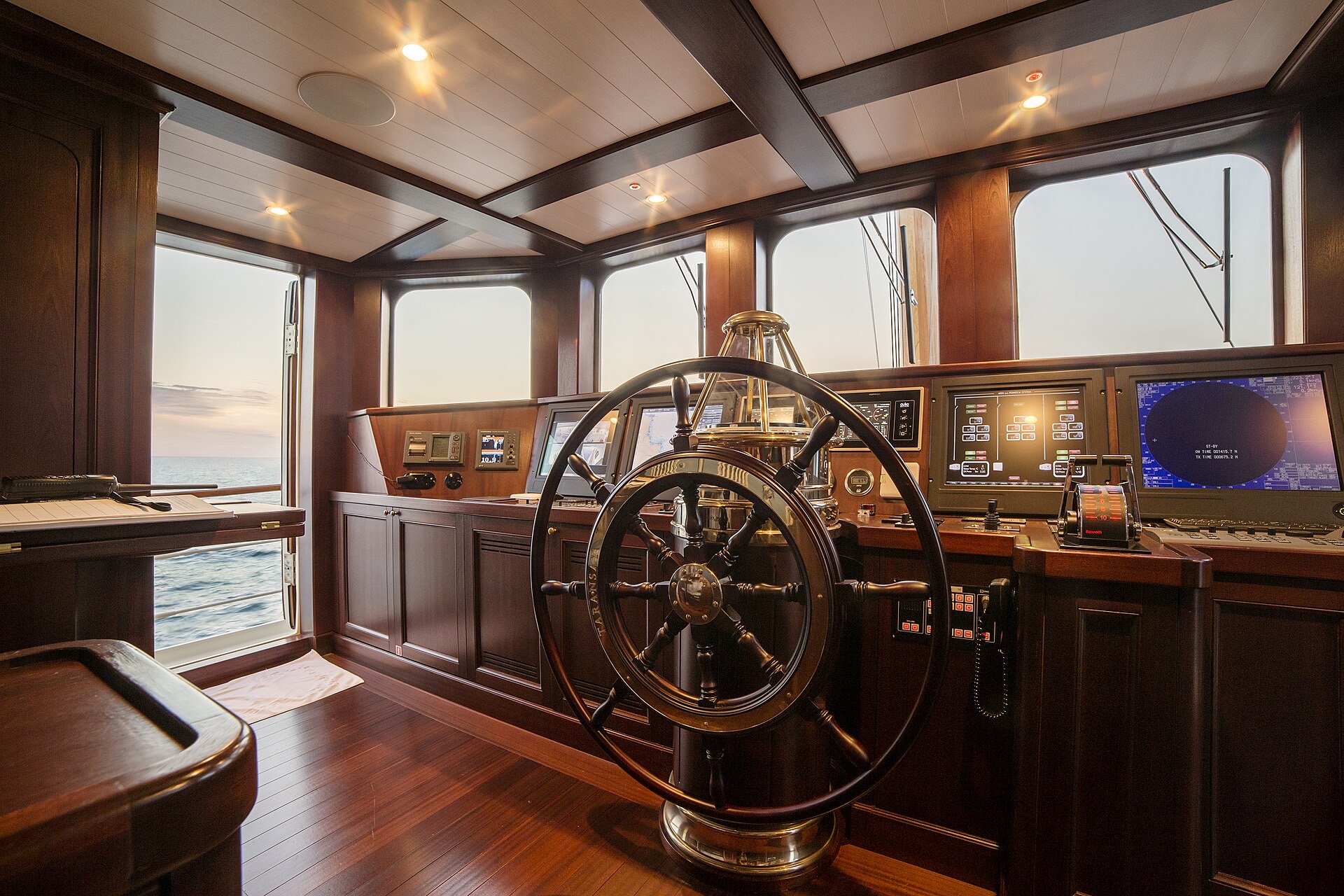
The tool may be a document several people can edit, a spreadsheet that keeps its history, a delivery note filed against the order, or software written for provisioning. What follows is the value of a single record, not a catalogue of products. The photograph is the wheelhouse of a yacht: the setting in which the record has to remain usable.
One record instead of several
Provisioning fails in the gap between versions. The chef has a list, the purser has an email, the supplier has a message from the night before, and each of them is slightly right. A single shared record gives the yacht one place where the order is whatever it currently is. When the itinerary moves, the record moves, and the previous version remains visible so someone can see what changed.
The benefit is modest, and it is the one that matters. It does not depend on a specialised product. It depends on the people who change the order changing the same document, and on that document being open to the chef, the captain, the purser and the supplier.
The guest requirements stay with the guest
Allergen categories, religious and cultural rules, and the dislikes that are not on any legal list are easy to lose in a thread. Attached to the guest, inside the same record as the order, they travel from the broker’s preference sheet to the person buying the fish. A change of plan at noon does not depend on someone remembering which message mentioned the shellfish.
The fourteen categories in Regulation (EU) No 1169/2011 are a sound checklist for that part of the record. The regulation does not prescribe the software. It does require the information to reach the person who needs it. A durable record is how the galley avoids serving what it has already been told to leave out.
The order and the delivery can be compared
A shared record lets the yacht compare what was asked for with what arrived. Substitutions sit against the line they replace, where the chef can accept or refuse them. A note made at receiving — the temperature agreed, the condition found, the time — can sit there too. The cold-chain duties in Regulation (EC) No 852/2004 and the fishery-product temperatures in Regulation (EC) No 853/2004 are not performed by software. A note does not chill a box. It does tell the next person whether the box was already warm.
The same record helps the handover between charters. What was left, what was rejected, and what the next brief forbids are easier to trust when they are not reconstructed from memory at the airport.
What a tool does not do
The record cannot know that the freezer is full, and it cannot taste the fish. A marina connection is often poor, and a file that cannot be opened alongside is the wrong place for the only copy of the order. A paper list in the galley, added to the record when the connection returns, is a sound arrangement.
Nor does the record discharge the yacht’s duties under food law, or take the place of the chef’s judgement on a substitution and the captain’s judgement on whether the yacht will still be alongside. A record that is not amended when the brief changes ceases to be the order.
Within those limits, a shared record is a practical improvement. It keeps the people who know the guests, the people who know the galley and the people who buy the food on the same version of the order.
Sources
Regulation (EU) No 1169/2011 for the allergen categories a record ought to be able to hold. Regulation (EC) No 852/2004 and Regulation (EC) No 853/2004 for the cold-chain duties a record can note and cannot perform.