The European Commission publishes an indicative calendar of fruit and vegetables for the climates of the European Union. Its Mediterranean zone, as the Commission draws it, covers Spain, Italy, Greece, southern France, eastern Portugal, Malta, Cyprus and southern Croatia. The lists that follow are the Commission’s, and the Commission describes them as a non-exhaustive idea of some of the fruit and vegetables harvested in the EU by the top producing countries. They are not a promise of what a stall holds this week. The page is the fruit and vegetables calendar.
How to read the list
A harvest calendar and a market are different documents. Fruit picked in season may have been stored. Fruit out of season may have been imported, or grown under cover, and still be excellent. The calendar is a way of asking the buyer, or the stall, what is being harvested here and what has travelled. Where the Commission’s name is uncommon in a British galley, a familiar word is given in brackets. The items themselves are the Commission’s.
Fruit
Spring. Strawberries, oranges, cherries, apricots, lemons, grapefruits, pears, apples.
Summer. Apricots, nectarines, peaches, plums, watermelons, melons, figs.
Autumn. Kakis (persimmons), apples, pears, pomegranates, table grapes, kiwis.
Winter. Raspberries, strawberries, kiwis, lemons, mandarins, oranges, apples, pears, grapefruits.
Winter strawberries and raspberries are on the Commission’s Mediterranean list. Treat that as the Commission’s indication of harvest, and still ask whether the punnet in front of you was grown nearby or shipped. The list is not a reason to stop asking.
Vegetables
Spring. Chards, artichokes, broccoli, asparagus, spinach, peas, broad beans, green onions (spring onions), green garlic, leeks.
Summer. Tomatoes, aubergines, courgettes, cucumbers, peppers, radishes, carrots, chards, leeks, lettuces.
Autumn. Endives, cauliflowers, green beans, chards, pumpkins, beetroots, lettuces, cabbages.
Winter. Chards, artichokes, celeries (celery), broccoli, cauliflowers, squash, pumpkins, escaroles, spinach, lettuces.
Tomatoes do not appear on the winter list. That is the useful clue in January. A tomato on a stall may still be very good. It is unlikely to be the same decision as a tomato in August, on price, on flavour and on how long it will keep underway.
What a stall is actually selling
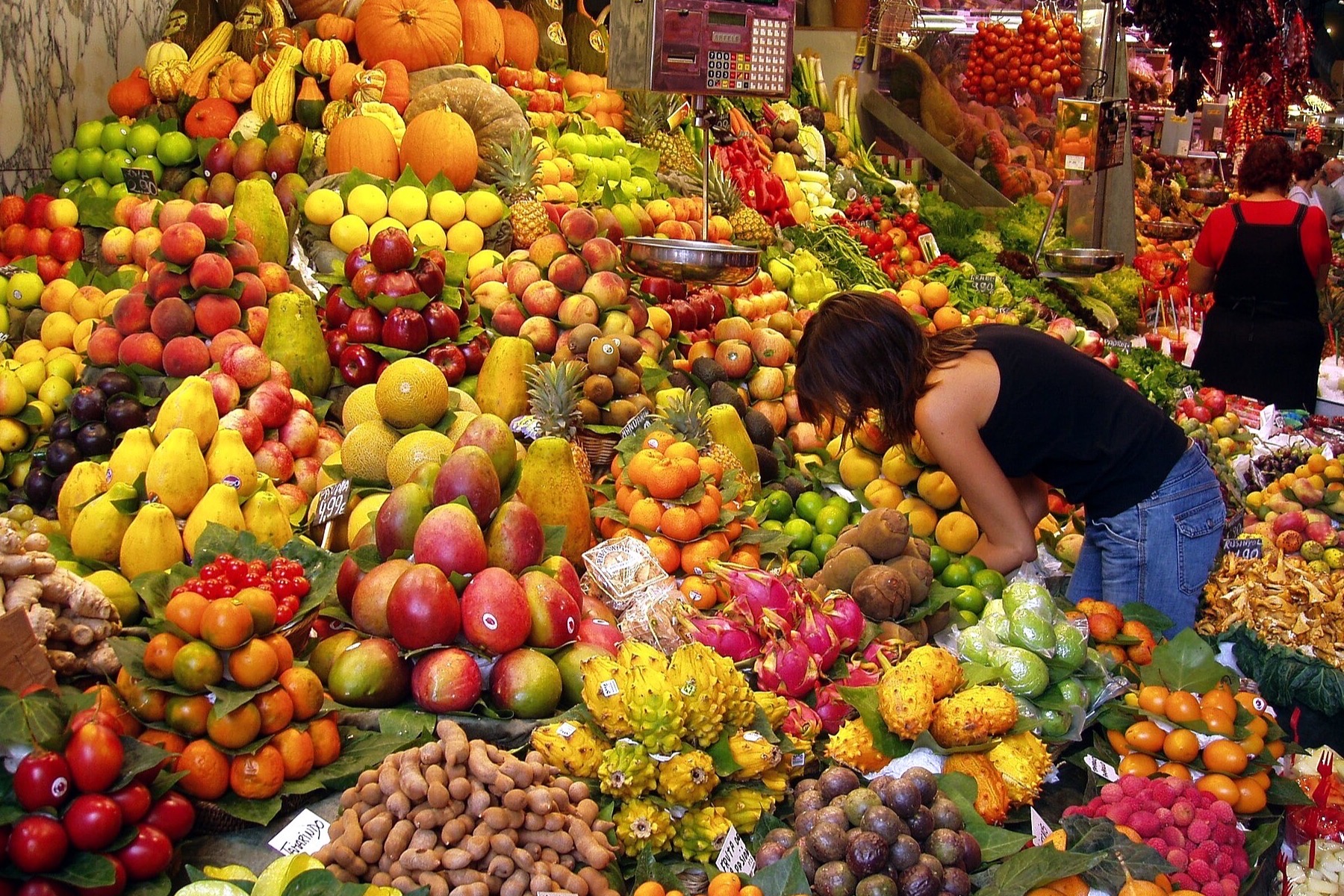
The photograph at the top of this article is a fruit stall in a Barcelona market. Beside the citrus it shows tropical fruit, including mango, pineapple and dragon fruit, which do not appear on the Commission’s Mediterranean harvest list. A working market sells both. The calendar is a way of choosing between what is in season nearby and what has been shipped.
Use the calendar when writing the menu, then test it against the port. Soft fruit, including figs, ripe peaches and berries, is a plan for the next day, not for a passage. Citrus in winter is the store that travels. Artichokes, asparagus and broad beans earn a place on the menu in their months, and are a weak request outside them. If the itinerary moves from the Balearics to the Adriatic, ask again. Southern Croatia lies within the Commission’s zone. A particular harbour, on a particular morning, is not the zone.
For the galley and the purser
The chef can write a menu that uses the season and still acknowledge what has been brought in. The purser can settle two questions with the supplier before the order is closed: which lines are local this week, and which are imported and therefore less tied to the calendar. Record the answer on the order. A guest who has been promised the market should receive the market.
These lists are the Commission’s harvest indication. They are offered so that a yacht can order with the season in view.
Sources
European Commission, Fruit and vegetables calendar, Mediterranean climate. The zone and the seasonal names above follow that page. Consult it for the temperate and oceanic lists, which are a different geography.